What Makes Tesla’s Windshield Different From Other EVs
[et_pb_section fb_built=”1″ _builder_version=”4.16″ custom_padding=”25px|||||” global_colors_info=”{}”][et_pb_row _builder_version=”4.16″ background_size=”initial” background_position=”top_left” background_repeat=”repeat” global_colors_info=”{}”][et_pb_column type=”4_4″ _builder_version=”4.16″ custom_padding=”|||” global_colors_info=”{}” custom_padding__hover=”|||”][et_pb_text _builder_version=”4.27.4″ background_size=”initial” background_position=”top_left” background_repeat=”repeat” hover_enabled=”0″ global_colors_info=”{}” sticky_enabled=”0″]
Tesla windshields aren’t your average pieces of auto glass. They’re an essential part of the car’s design, safety, and technology. Unlike many other EVs, Tesla uses oversized panoramic glass, advanced acoustic insulation, and camera integration for Autopilot. This makes driving feel futuristic but also raises replacement costs. In this blog, we’ll explain how Tesla’s windshield tech is unique, how it compares to other EVs, and why mobile auto glass repair from Imperium Auto Glass Houston is the smart solution for Tesla owners.
Introduction
If you drive an electric car, or are thinking about buying one, you’ve probably noticed how much glass is used in its design. Windshields in EVs aren’t just for visibility anymore. They reduce noise, keep the cabin cool, and even house safety cameras.
But Tesla takes things further. Their approach to windshield design is bold, high-tech, and very different from most other automakers.
This blog is for Tesla owners, EV enthusiasts, and anyone curious about auto glass technology. By the end, you’ll understand:
- What makes Tesla windshields unique
- How they compare to other EV brands
- Why Tesla windshield replacement is more complex
- How mobile glass services save Tesla owners time and money
What makes Tesla’s windshield design philosophy different?
Tesla has reimagined the role of auto glass. Instead of simply protecting passengers from wind and rain, Tesla’s windshields double as design features and safety systems.
- Size and visibility: Tesla vehicles often feature oversized windshields, like the sweeping Model X windshield and the panoramic glass roofs of the Model 3 and Y. This creates a more open cabin and contributes to structural strength.
- Unique wiper systems: The Cybertruck introduces one of the largest single-piece windshields in any production vehicle, paired with a giant single-blade wiper powered by a specialized 48-volt motor.
This emphasis on scale and minimalism sets Tesla apart from other EV brands, which typically use more conventional windshield sizes and multi-blade wipers.
How does Tesla use software in windshield technology?
Instead of packing the windshield with digital displays or heads-up projections, Tesla simplifies hardware and leans on software.
- Centralized information: Tesla’s choice to keep dashboards clear means all driving data is shown on the central touchscreen, leaving the windshield unobstructed.
- ADAS integration: Cameras mounted behind the windshield connect directly with Tesla’s Autopilot and Full Self-Driving software. This software-first approach makes Tesla’s windshield more critical than in vehicles where multiple sensors are spread across the car.
By relying so heavily on software and vision-based systems, Tesla maximizes innovation but also increases the importance of correct windshield alignment and recalibration after replacement.
What materials does Tesla use in its windshields?
Tesla equips its glass with acoustic and infrared features to improve comfort and efficiency:
- Acoustic glass: Reduces cabin noise, particularly in highway driving.
- Infrared layers: Block solar heat and filter UV rays; Tesla reports the Model 3’s roof blocks 98% of UV rays.
Other EV makers like Mercedes, Lucid, and BMW take a slightly different approach, using laminated acoustic glass on all windows for consistent soundproofing. Mercedes even adds infrared-reflective coatings to better reduce cabin heat.
Tesla focuses on the windshield and roof for maximum impact, while others spread innovations more evenly across the car.
Is Tesla’s “Armour Glass” real?
Tesla made headlines when it unveiled “Armour Glass” for the Cybertruck, showcasing the potential of ultra-strong, shatter-resistant panels.
However, real-world production models do not yet use these futuristic materials. Current Tesla windshields remain closer to traditional laminated glass, though reinforced for strength.
Other automakers, meanwhile, are experimenting with polycarbonate or heated glass films. For now, Tesla’s “Armour Glass” remains more of a concept than a consumer reality.
How do Tesla’s safety sensors rely on the windshield?
Tesla’s approach to Advanced Driver Assistance Systems (ADAS) is unique:
- Vision-first: Tesla relies on cameras embedded in the windshield that use neural network processing, not on LiDAR or radar.
- Single point of failure: Since so much depends on the windshield-mounted cameras, any chip, crack, or misalignment can affect safety features like lane-keeping, braking, or collision avoidance.
By contrast, many competitors, such as BMW and Hyundai, use redundant systems, including radar and LiDAR plus cameras, making them less vulnerable to a single windshield issue.
How do other EV makers design their windshields?
While Tesla pushes bold ideas, competitors innovate in different ways:
- BMW iX & i7: Using augmented reality projections across the windshield for driver assistance.
- Lucid Air: Integrates holographic overlays for navigation and driving data.
- Ford Mach-E & VW ID.4: Offer rain-sensing wipers, panoramic roofs, and laminated glass, focusing on practicality over radical design.
The key difference? Tesla bets big on minimalism and software, while others experiment with layering digital information directly into the glass.
Why does windshield replacement matter more for Teslas?
Replacing a Tesla windshield is more complex than swapping standard auto glass. Here’s why:
- Sensor recalibration: After installation, the cameras embedded in the windshield must be recalibrated for safety systems to function.
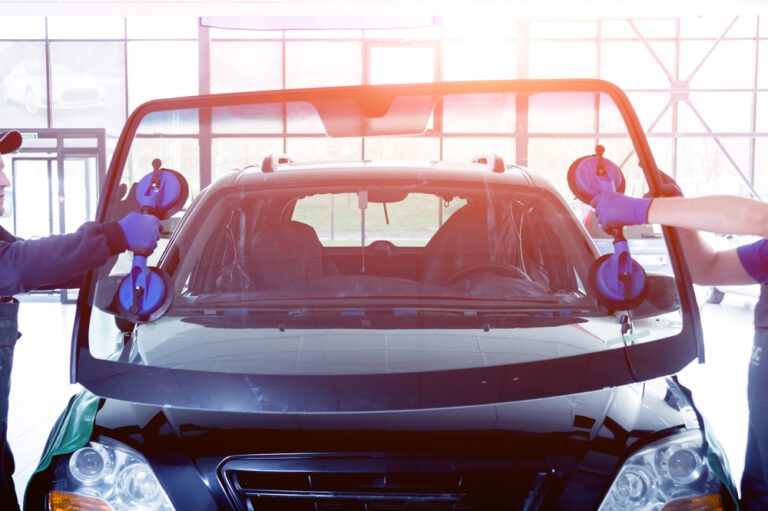
- Oversized glass: Larger windshields, like those in the Model X and Cybertruck, require specialized tools and expertise.
- Strict rules: Tesla allows only limited repairs; if cracks reach certain zones, full replacement is required.
For Tesla owners, choosing an experienced auto glass provider is essential for safety, not an option.
How can mobile windshield service help Tesla and EV owners?
Imperium Auto Glass offers mobile auto glass services, including windshield replacement and ADAS recalibration, within and near Houston, bringing expert service directly to where you are.
Our team ensures you get:
- Convenience: No need to drive with a cracked windshield.
- Expert recalibration: Ensures Tesla’s ADAS cameras are aligned after replacement.
- EV experience: Our technicians understand the unique requirements of Tesla and other EV windshields.
- Time savings: No long waits at a service center.
- Peace of mind: OEM-quality glass and professional installation.
Mobile service is particularly valuable for EV owners, since towing or driving long distances with damaged glass could put both safety and vehicle systems at risk.
Frequently asked questions
Can Tesla windshields be repaired instead of replaced?
Repairs are limited. Tesla restricts repairs to small chips outside key safety zones. Larger or inner-layer cracks require full replacement.
Why are Tesla windshields more expensive than other EVs?
Because they’re larger, more complex, and integrated with sensors, Tesla windshields require specialized installation and recalibration.
Do all Teslas have acoustic glass?
Most models feature acoustic laminated glass on the windshield, but some side and rear windows still use single-pane glass.
How does windshield damage affect Tesla Autopilot?
Even small chips near the cameras can interfere with Autopilot and Full Self-Driving features, making quick repair or replacement essential.
Can mobile services handle Tesla recalibration?
Yes, trusted providers like Imperium Auto Glass bring recalibration tools directly to you for safe, accurate service.
Do other EV brands have cheaper glass repairs?
Usually, yes. Many use smaller or less integrated glass panels, which are easier to replace.
[/et_pb_text][/et_pb_column][/et_pb_row][/et_pb_section]